
Knowing how to match colors is game changing skill if you intend to look good, especially as a man. Once you get the simple principles behind it, there’s literally no going back.
The idea is not even that complicated to begin with and no, the goal is not to memorize the whole color wheel. You just got to know practical formulas for work, dates, weddings, weekends, and different seasons, then adjust them to suit the clothes I own.
Knowing the Basics of Color Matching

Before stressing yourself, thinking about if the color of your top matches the trousers, I need to understand why some certain colors look good.Great color matching usually has a lot to do with contrast, balance and knowing which shade should lead the outfit and which one should follow.
Neutral Colors Every Man Should Know
If you’ve been reading most of my blog, you’d know I consider navy, black, white, gray, cream, beige, camel, and brown the backbone of an elegant wardrobe.These are the colors that cooperate rather than trying to needlessly compete. An attribute that makes them easy to combine.
Useful starting combinations include:
- Navy + white + dark brown
- Charcoal + light blue + black
- Cream + olive + chocolate brown
- Beige + navy + brown
- Gray + white + burgundy
Work around neutral colors first, then add more expressive tones once your foundation feels right.
Warm Colors vs Cool Colors
Warm colors include (but are not limited to) shades like brown, camel, burgundy, mustard, and burnt orange.Cool colors include navy, blue, teal, gray, and many greens. You don’t have to keep the warm and cool shades separate.
Some of my favorite outfits deliberately mix them. Navy trousers with a camel sweater and dark brown loafers are a perfect example.
Using Light and Dark Colors Together
If you need definition, use contrast. A blue shirt and a charcoal trousers allows both pieces of the outfit to breathe. while cream knitwear over dark indigo jeans creates the same effect casually.
When one half is light and the other half is dark, even the simplest of outfits can look beautifully put together.
The Three-Color Rule
I often use three main colors as a guide when building an outfit.
For example:
- White Oxford shirt
- Navy trousers
- Dark brown loafers
Your accessories can repeat or reinforce the shade you want to stand out ever so slightly. It keeps the visual conversation civilized.
Choosing a Dominant Color
Every outfit benefits from having a star, like the main event of a show. If forest green is the statement, I might pair it with cream trousers and dark brown shoes.
The supporting colors should frame the main shade, not wrestle it for attention.
How to Match Colors for Formal Outfits

When it comes to men’s formal wear, restraint is usually rewarded. As you would expect, it usually begins with a suit.Choose a shirt that creates clean contrast, then use the tie and shoes to introduce controlled depth.
Matching Suits With Dress Shirts
My go-to choices for suits are Navy, charcoal, medium gray, and black, they usually make up a reliable foundation.
Some combinations I trust are:
- Navy suit + white dress shirt
- Navy suit + light blue dress shirt
- Charcoal suit + white dress shirt
- Charcoal suit + pale blue dress shirt
- Medium gray suit + soft pink dress shirt
- Dark brown suit + cream dress shirt
If you notice, a shirt that complements the suit eventually becomes a big part of it, but not exactly in a loud or aggressive way.
Matching Ties With Shirts and Suits
It’s not a general rule, but I personally prefer ties that are darker than the dress shirt, but distinct from the suit.
For example, a burgundy tie looks beautiful with a pale blue shirt and navy suit.The same idea applies if your tie is patterned.
Coordinating Dress Shoes With Suit Colors
For formal dressing:
- Black suit + black Oxford shoes
- Charcoal suit + black Oxford shoes
- Navy suit + black or dark brown Oxford shoes
- Medium gray suit + black, burgundy, or dark brown shoes
- Brown suit + dark brown shoes
The more formal the event, the darker and cleaner I usually keep the footwear.
Using Pocket Squares as Accent Colors
I’ve never felt like the pocket square should completely match the color of the tie. A white linen square is almost always elegant.
I prefer pulling a minor shade from the tie or shirt for the pocket square. However, if the tie is patterned, the the pocket square should be too.
Formal Color Combinations That Always Work
When in doubt, these are dependable:
- Navy + white + burgundy + dark brown
- Charcoal + pale blue + black
- Medium gray + white + navy + black
- Dark brown + cream + forest green + dark brown
Also Check Out: How to Dress Classy as a Man on a $500 Budget
How to Match Colors for Business Professional Outfits

Business professional or business formal is a look that deserves an approach of its own. The colors need authority without coming across as monotonous.I want the outfit to look dependable at 9 a.m. and still polished during a late afternoon meeting.
Navy Suit Color Combinations
Navy is arguably the most versatile business suit color.
Try:
- Navy + white + burgundy
- Navy + light blue + dark brown
- Navy + pale pink + burgundy
- Navy + soft lavender + black
Keep brighter colors close to the shirt or tie while navy carries the outfit.
Charcoal Suit Color Combinations
Charcoal has a serious, executive quality.
I particularly like:
- Charcoal + white + black
- Charcoal + light blue + burgundy
- Charcoal + pale pink + dark brown
- Charcoal + lavender + black
Gray Suit Color Combinations
Medium gray feels slightly lighter and more flexible than charcoal.
A white shirt with burgundy shoes can create character, while light blue and dark brown produce a softer business look.
Matching Shirts With Tailored Trousers
Without a suit, I use contrast:
- White shirt + navy trousers
- Light blue shirt + charcoal trousers
- Pale pink shirt + medium gray trousers
- Cream shirt + dark brown trousers
This keeps separates looking deliberate rather than like half of a forgotten suit.
Coordinating Leather Shoes and Belts
For traditional corporate outfit, keep the belt and shoe color the same or closely related.Black shoes call for black leather, while dark brown footwear works naturally with a dark brown belt.
How to Match Colors for Business Casual Outfits

Unlike business formal outfits, you’re allowed to be a little bit free when choosing business casual colors. Olive, cream, beige, green, burgundy, and seasonal colors add a lot of character without throwing professionalism out the window.
Matching Oxford Shirts With Chinos
Oxford shirts and chinos are practically old friends.
Try:
- Light blue Oxford + beige chinos + dark brown loafers
- White Oxford + olive chinos + brown Derby shoes
- Pale pink Oxford + navy chinos + burgundy loafers
- Sage Oxford + stone chinos + dark brown suede shoes
Pairing Knit Polos With Tailored Trousers
Knit polos generally carry texture, and are one of my favorite outfit choices. So, you should usually keep the trousers relatively simple.
Forest green works beautifully with cream. Navy pairs with light gray. Chocolate brown can look exceptional with beige or stone.
Coordinating Blazers With Contrasting Trousers
Contrast is essential when combining separates.
- Navy blazer + gray trousers
- Camel blazer + charcoal trousers
- Olive blazer + cream trousers
- Brown herringbone blazer + navy trousers
If the colors are too similar, the outfit can look like a mismatched suit.
Using Earth Tones in the Office
Olive, camel, stone, chocolate brown, cream, and taupe create sophisticated business casual palettes.
I might wear an olive shirt with stone trousers and dark brown loafers, or a cream knit polo with chocolate brown pleated trousers.
Adding Pastels Without Losing Professionalism
Pastels work best when the rest of the outfit has authority. Powder blue, lavender, pale pink, and soft yellow can sit beautifully against navy, charcoal, beige, and brown.
How to Match Colors for Smart Casual Outfits

Smart casual is where I loosen the rulebook. There’s already enough polish to feel grown, but then there’s also the freedom to play with color and texture.
Building Outfits Around Navy and Brown
Navy and brown are one of menswear’s great partnerships.
Consider:
- Navy knit polo + beige trousers + dark brown loafers
- Navy sweater + camel trousers + brown suede boots
- Brown suede jacket + navy trousers + cream knitwear
Combining Cream, Olive, and Chocolate Brown
This trio feels rich without looking flashy.
A cream cable knit sweater with olive trousers and chocolate brown boots is simple, masculine, and full of texture.
Wearing Burgundy, Forest Green, and Deep Blue
Rich colors work beautifully when only one takes center stage.
If I choose burgundy knitwear, I might add charcoal trousers and dark brown shoes. With forest green, cream or beige makes an excellent partner.
Mixing Tailored Pieces With Casual Colors
A pair of charcoal pleated trousers can make a sage polo look smarter. Cream trousers can elevate a navy rugby shirt.
Let the tailoring bring discipline while the colors provide personality.
Using Suede Footwear to Soften Color Combinations
Suede has a softer visual finish than polished leather.
Brown suede loafers complement cream and green, taupe suede boots work with navy and charcoal, while burgundy suede can bring life to gray trousers.
Also Check Out: 19 Essential Wardrobe Pieces Every Man Needs
How to Match Colors for Casual Outfits

Causal clothing are designed to give you day-to-day freedom. Understandably, you’d still want the colors to feel connected.
Looking relaxed and looking random are two completely different things.
Matching T-Shirts With Jeans and Chinos
White, cream, gray, navy, olive, and black T-shirts provide countless options.
- White T-shirt + dark indigo jeans
- Cream T-shirt + olive chinos
- Black T-shirt + gray jeans
- Navy T-shirt + beige chinos
Coordinating Polos With Shorts and Trousers
Unlike knit polo that we mentioned earlier, regular polo shirts provides enough structure to carry stronger color.
Try forest green with beige shorts, burgundy with gray trousers, or powder blue with navy chinos.
Matching Denim Washes With Top Colors
Dark indigo pairs beautifully with cream, white, burgundy, camel, and forest green tops.
Light wash denim works with navy, black, olive, brown, and darker gray.
Washed black denim looks especially strong with cream, rust, gray, olive, and chocolate brown.
Wearing Bright Colors With Neutral Bottoms
If your top is teal, mustard, coral or any other shade that’s very expressive, I would go for trousers in beige, navy, gray, cream, or black.
Give the loudest color enough room to perform its solo.
Coordinating Sneakers With Casual Outfits
White sneakers makes dark outfits brighter, while grey sneakers blend with washed jean/denim. Brown or beige suede sneakers work beautifully with earth tones.
How to Match Colors for Date Night Outfits

There’s no gentleman that wouldn’t have a date night outfit. So for dates, I like colors that create presence, but don’t look rehearsed.Rich tones work especially well because they feel sophisticated under evening lighting.
Dark and Rich Color Combinations for Evening Dates
Consider:
- Burgundy + charcoal + dark brown
- Forest green + black + chocolate brown
- Navy + cream + burgundy
- Black + camel + dark brown
Light and Relaxed Colors for Daytime Dates
Daytime calls for softer palettes:
- Powder blue + cream + brown
- Sage green + stone + tan
- White + navy + dark brown
- Soft pink + beige + brown
Using Black Without Going Completely Monochrome
Black becomes much more interesting beside camel, cream, gray, forest green, or brown.
A black polo with camel trousers feels sophisticated without becoming overly serious.
Pairing Deep Colors With Neutral Trousers
Burgundy, teal, plum, and forest green become much easier to wear when grounded by charcoal, stone, beige, or cream trousers.
Also Check Out: 15 Niche Summer Outfits Inspiration For Busy Corporate Men
How to Match Colors for Weddings and Special Occasions

Special occasions like weddings, balls, black tie events, etc, deserve a little extra in terms of color.
Special thoughts should be given to lighting, season, dress code, and venue all influence what feels appropriate.
Choosing Colors Based on the Dress Code
Black tie events naturally favors black, white, and very dark tones. Formal weddings welcome navy and charcoal, while cocktail settings allow more personality.
Matching Suits With Wedding Shirt Colors
White remains the safest option, but pale blue, soft pink, and subtle lavender can add character when the dress code allows.
Coordinating Ties and Pocket Squares
Complement, do not clone.
A burgundy tie might work with a white square containing a subtle burgundy detail. This creates connection without looking overly coordinated.
Choosing Shoes for Navy, Gray, Brown, and Black Suits
- Navy + black or dark brown
- Gray + black, dark brown, or burgundy
- Brown + dark brown
- Black + black
Wearing Seasonal Colors
Spring welcomes pastels, summer loves lighter neutrals, autumn embraces brown, olive, and burgundy, while winter makes charcoal, navy, forest green, and camel shine.
I’m just going to give you a simple rub through.
Spring welcomes pastels, summer loves lighter neutrals, autumn(fall) embraces brown, olive, and burgundy, while winter makes charcoal, navy, forest green, and camel shine.
How to Match Colors for Summer Outfits

The color of your outfit during the summer should feel light and fresh, a bit effortless too.
Colors like cream, white, beige, stone, blue, sage, and soft pastels more room, and are your natural choices, because when it’s bright outside you need to be bright too.
Pairing White With Summer Colors
White works beautifully with:
- Powder blue
- Navy
- Sage green
- Coral
- Beige
- Olive
Styling Linen in Cream, Beige, Blue, and Olive
Linen is already a very relaxed fabric that’s perfect for a summer weather, so natural shades work with it beautifully.
A blue linen shirt with cream trousers is timeless. Olive linen with beige trousers feels earthier and more distinctive.
Combining Pastels With Neutral Trousers
Pair soft pink, lavender, powder blue, or butter yellow with stone, white, beige, navy, or light gray.
Matching Colorful Shirts With Tailored Shorts
If the shirt carries color, I keep the shorts calm. Sage with cream, teal with beige, or soft pink with navy all work naturally.
Choosing Light Footwear Colors
Summer is perfect for tan, beige, white, cognac, cream, and light brown footwear, particularly in suede, woven leather, or canvas.
How to Match Colors for Winter Outfits
Contrary to summer, winter to needs deeper color palettes and richer fabric to shine. It’s one of those seasons when color can simmer rather than sparkle.
Building Outfits With Camel, Charcoal, and Navy
These three colors work beautifully together.
A camel coat over navy knitwear and charcoal trousers creates an outfit that looks polished almost automatically.
Pairing Burgundy and Forest Green With Neutrals
Burgundy works with charcoal, navy, camel, cream, and brown.
Forest green pairs naturally with cream, beige, charcoal, navy, and chocolate brown.
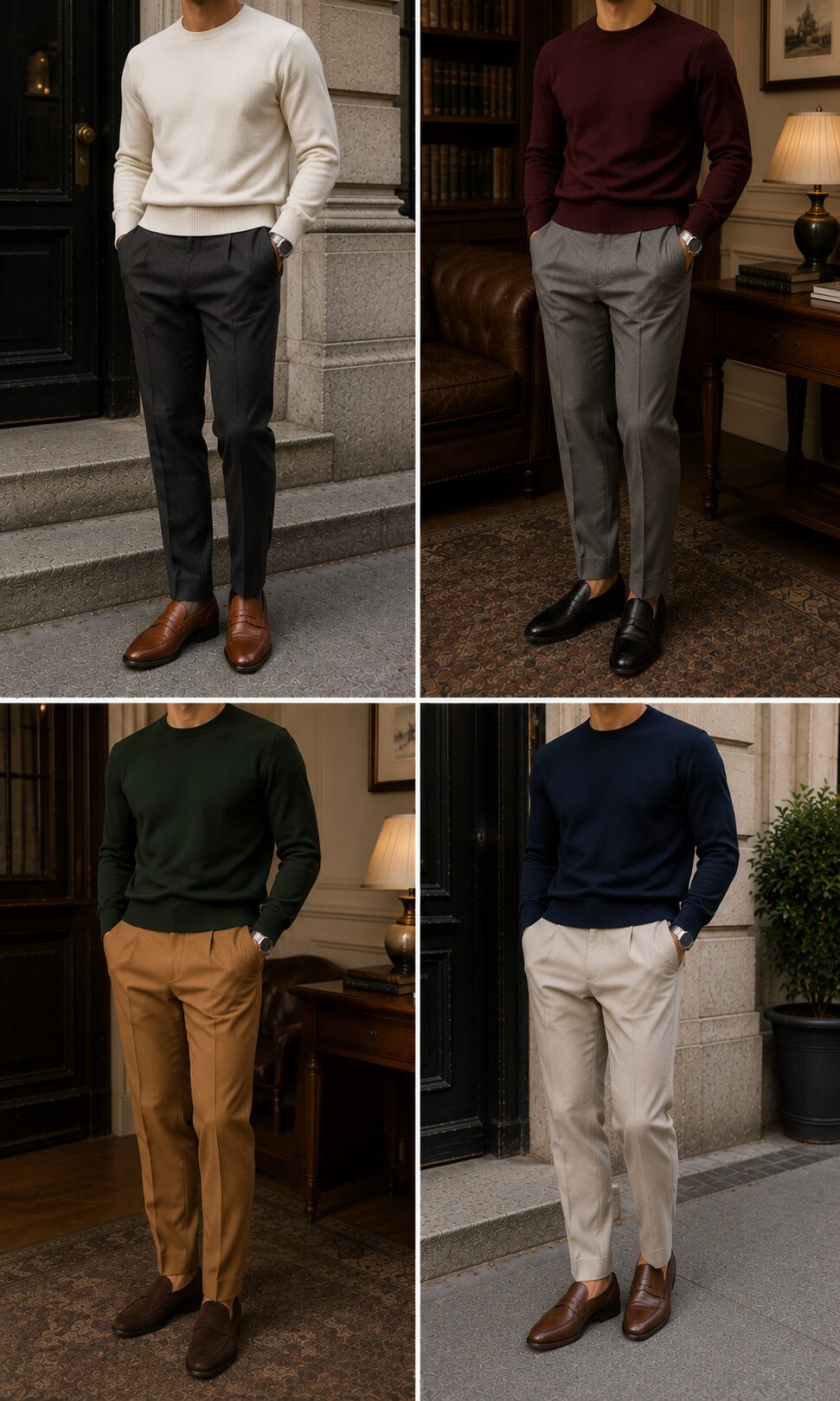
Coordinating Sweaters With Wool Trousers
Try:
- Cream sweater + charcoal trousers
- Burgundy sweater + gray trousers
- Forest green sweater + camel trousers
- Navy sweater + stone trousers
Matching Coats With the Rest of Your Outfit
Camel coats thrive over navy, charcoal, brown, and cream. Navy coats pair easily with gray, burgundy, camel, and green.
Using Scarves to Introduce Accent Colors
A burgundy scarf can wake up a charcoal coat. Forest green adds richness to camel, while cream can brighten navy outerwear.
Finally
Matching colors for your outfit, regardless of occasion can be helped immediately you understand contrast, balance and context.
From boardrooms and weddings to dates, vacations, and weekends, the same principle applies. Let one color lead, support it thoughtfully, and allow good style to speak naturally.


